Originally published by Exeunt Magazine
In a piece for Exeunt in 2014 on the first production of Revolt. She Said. Revolt Again., Dan Hutton noted that feminist theatre was having a moment, “with a new passion and quality of debate which I’ve not experienced in my years of theatre-going”. The moment endured: over the last 10 years, feminist theatre has returned to the UK with a vengeance, opening up new forms and perspectives as well as contributing to long established debates. Arguably, as well as continuing to thrive on the fringe, it has been the period when feminist issues and plays finally made the main stages: the National Theatre has staged Consent and Prima Facie, the Almeida commissioned Oil and The Writer, and seven methods of killing kylie jenner reopened the Royal Court downstairs after Covid-19 lockdowns.
This hasn’t happened in a vacuum: the theatrical and political landscape has shifted significantly in the last 10 years. In 2018, the #MeToo and #TimesUp movements sparked a reckoning in the UK theatre industry around both sexual harassment and gender imbalances in programming. The resurgence of the global Black Lives Matter movement in May 2020 led to much needed conversations around antiracism and programming to foreground the voices of Black creatives. These movements have not just changed the theatre industry but the kinds of plays that get made and programmed. And in recent years, trans rights have become an embattled topic within British feminism and society more broadly. In this increasingly hostile context, it feels especially important to recognise that some of the most exciting feminist theatre in recent years has been made by trans and nonbinary people, including Travis Alabanza, Chris Bush, and Laurie Ward and Charli Cowgill of piss/ CARNATION.
On a more personal note, the last ten years has also been the period when I got really into theatre. I started theatre reviewing at university, wrangling opinionated reviews of student shows in between essays. In 2017, I began researching a PhD on feminist theatre and the next year took up co-editing Exeunt, allowing me to see far more theatre than I could otherwise afford and pushing my tastes to the more experimental. I’m now publishing an academic book on the fruits of this research: Radical Realisms in Contemporary British Theatre: Rethinking Feminist Form in Plays by Women. The book argues 1) that the last ten years of British theatre has seen a resurgence of feminist theatre and 2) that much of this feminist theatre can be distinguished by its experiments with form.
So, what makes a feminist play? Personally, I think that a play needs to be more just than written by a woman, with strong female characters, to be considered feminist (although that is a good starting point). It might be about feminist issues or stage a feminist debate, for example Laura Wade’s Home, I’m Darling or Rebecca Lenkiewicz’s Her Naked Skin. But the plays that excite me most are doing something politically with their form as much as their content. Their forms might perplex, frustrate, enrage, as these writers and companies find new ways of presenting their material in a way that makes their ideas sing.
May I present 10 feminist bangers from the last 10 years for your consideration:
1. Revolt. She Said. Revolt Again. (The Other Place, 2014; Traverse Theatre, 2017)
Across four acts, Alice Birch’s Revolt presents a kaleidoscope of feminist issues. The language is playful, the first scene staging a deconstruction of the gendered language around heterosexual sex, concluding with a woman telling her partner that she is “enveloping” him with her “mighty vagina”. The third act of the play stages a cacophony of conflicting messages given to women, increasingly overshadowed by violence. Language itself breaks down and the scene concludes with an explosion. In the final brief, scene, four women discuss their plays to “dismantle the monetary system”, “overthrow the government” and “eradicate all men”, ideas that recall Valerie Solanas’ incendiary SCUM Manifesto. Yet the disconsolate tone means that the spectre of failure hangs heavy; there’s a sense that this revolution might fail before it’s even begun.
While Revolt engages directly with core feminist ideas, its fragmented form makes it hard to draw a key message from the play. You could read it as a critique of popular feminism that centres individual and personal choice at the expense of considering structural violence, or even a reflection on the failure of the promises of the second wave feminist movement. It finds a way of getting its audience to engage with radical feminist ideas (radical in the sense of going back to the roots rather than other ways the term has been co-opted), creating a theatrical experience as bracing as Solanas’ ideas. It’s also enormous fun to watch, as the performers jump between different characters and scenes. Revolt. is a worthy touchpaper for a decade of feminist theatre.
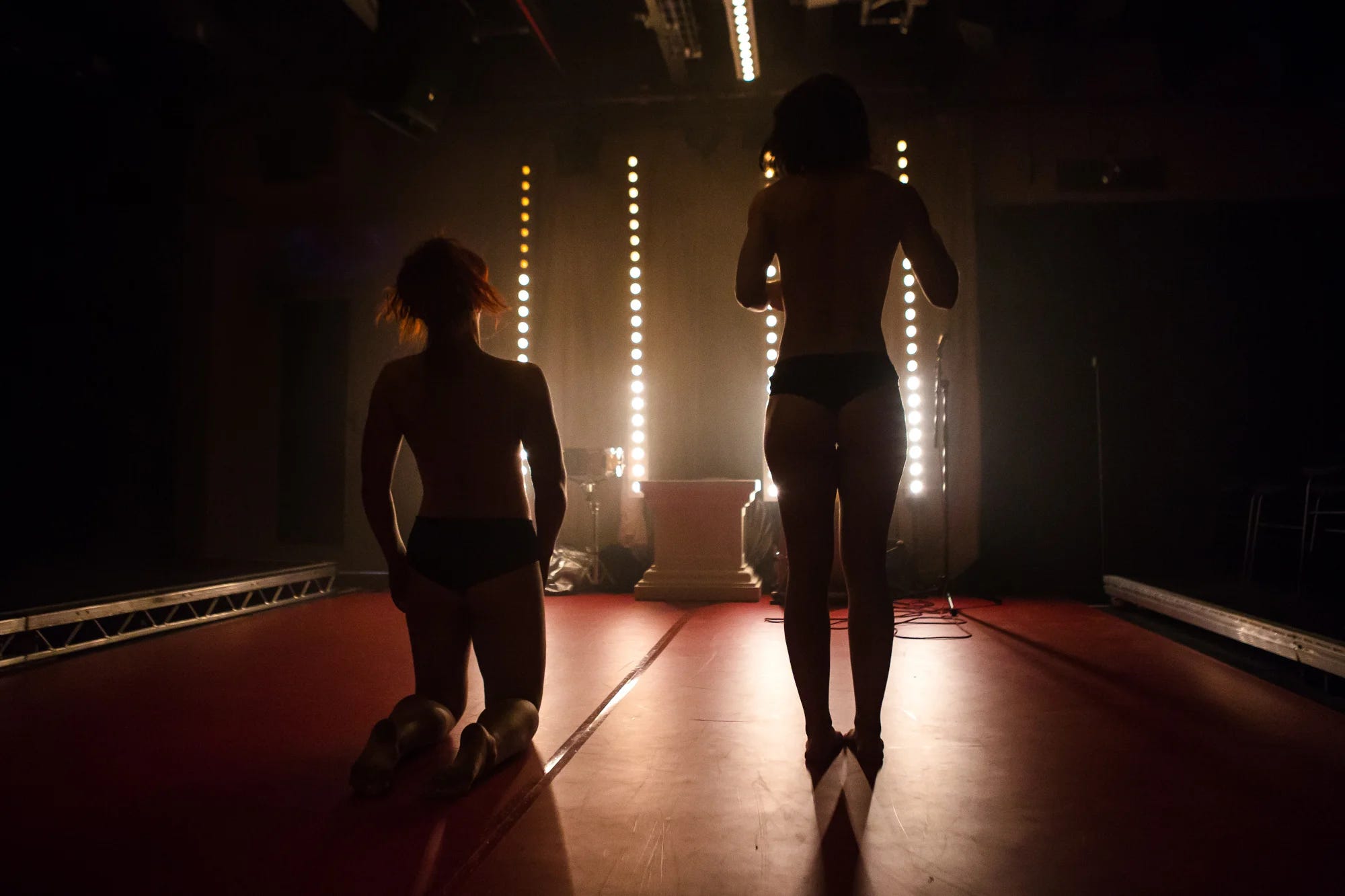
2. Two Man Show (Summerhall, 2016; Soho Theatre, 2017)
RashDash’s Two Man Show was one of the inspirations for me to pursue a PhD in feminist theatre. Abbi Greenland and Helen Goalen, along with musician Becky Wilkie, stage a play about two brothers, Dan and John, responding to the illness and death of their father. While these scenes parody stereotypes of masculinity, they are spliced with dance sections that Greenland and Goalen perform almost entirely naked. These dance sections are abstract, conjuring different ways of inhabiting gender through movement. The piece ends with a reflection on the limitations of its own form by staging a confrontation between ‘John’ and Helen. It leaves a tangle of questions around gender and identity rather than attempting to bring a false resolution to these complex issues.
While in 2016, the show felt very fresh and new, its exclusive focus on white, cisgender bodies and experiences of gender now seems a more glaring oversight. Yet we shouldn’t underestimate the significance of RashDash as a company, who have been making work in feminist work since their formation in 2009 – aka since before it was cool again. Throughout the last ten years, they’ve consistently created boundary-pushing work and reflected critically on their own practice, including Three Sisters (2018), their punk adaptation of Chekhov that confronted the veneration of the classics in the theatre industry, and Oh Mother (2022), exploring the messiness of caring and decisions about whether to become a parent.
3. The Writer (Almeida Theatre, 2018)
As well as sparking necessary and overdue conversations around sexual harassment and gendered power imbalances in the theatre industry, the #MeToo movement also generated appetite for shows that sparked these conversations. 2018-19 was an exceptionally fruitful time – but Ella Hickson emphasised that she wrote The Writer the summer before the story broke: “It got totally co-opted into a narrative – a #MeToo, #BurnItDown narrative, whereas the play was about the inescapability of capitalism in our current state.” Nevertheless, The Writer is a powerful feminist critique of the theatre industry and its power structures.
The Writer dramatises a search for the theatrical form in which the female writer can express what she needs to say. This results in a constellation of forms, from the metatheatrical realism of scenes between the writer and a male director, and the writer and her boyfriend, to a monologue in which the writer describes a mythic visit to the woods and finding freedom in her first sexual relationship with a woman. This temporary respite comes crashing down in the final scene, in which the writer (unintentionally) hurts her girlfriend during sex. As well as its astute critique of the gendered power dynamics of the theatre industry, what makes The Writer so subversive is the sense of constantly shifting reality created by the shapeshifting form. It’s a play that I’ve been sitting with for years and only recently feel like I’ve got a handle on what it all means.
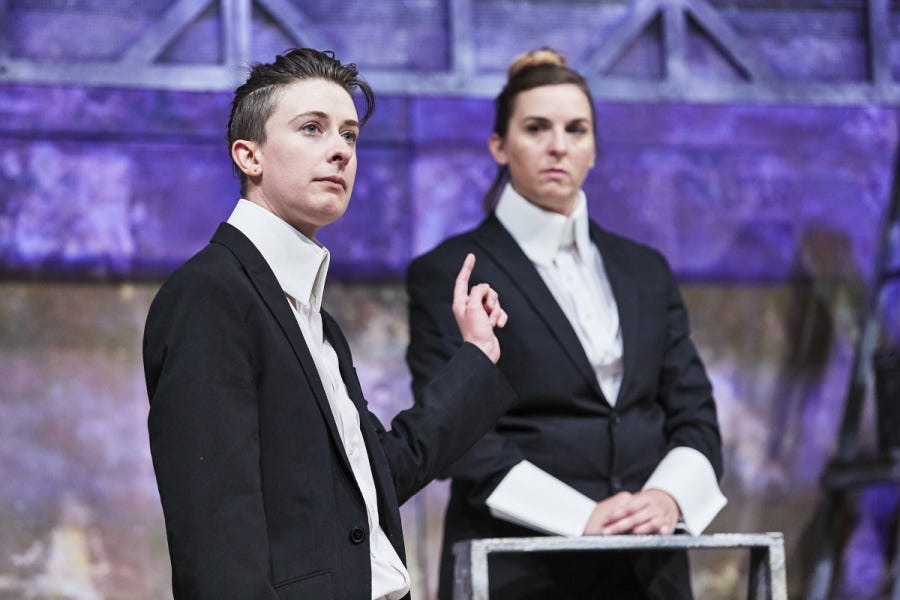
4. It’s True, It’s True, It’s True (Underbelly 2018/19; touring 2019; BBC Four 2020)
Breach Theatre’s It’s True, It’s True, It’s True looks to the past to speak arrestingly to the present. Writers Billy Barrett and Ellice Stevens devised the show with the company reconstructing the trial of Agostino Tassi for the rape of painter Artemisia Gentileschi from 17th-century court transcripts. Breach develop their trademark documentary theatre practice, putting pressure on testimony, and encourage audience members to make connections with contemporary rape trials and low conviction rates.
What makes It’s True stand out from other plays that have placed sexual violence centre stage is the boldness of its theatrical images. The company of three women performers wear suits and white shirts with oversized collars, switching from judge to witness to accused. Eventually three characters emerge: Artemisia, Tassi, and Artemisia’s maid. In a scene that still haunts me, Ellice Stevens as Artemisia is made to plunge her hands into buckets of gold paint, a symbolic representation of her torture to confirm her testimony; the judge decided that Artemisia, not Tassi, should be put in thumb screws in order to preserve the male painter’s hands. Stevens repeats “It is true” again and again, her stalwart assertion of what happened to her in the face of disbelief reverberating down the years. In the final scene, Artemisia calls on Judith to help her and together they re-enact the slaying of Holofernes, a Bible story that Artemisia painted several times, while a final monologue refuses to allow Artemisia’s life story to be reduced to her rape.
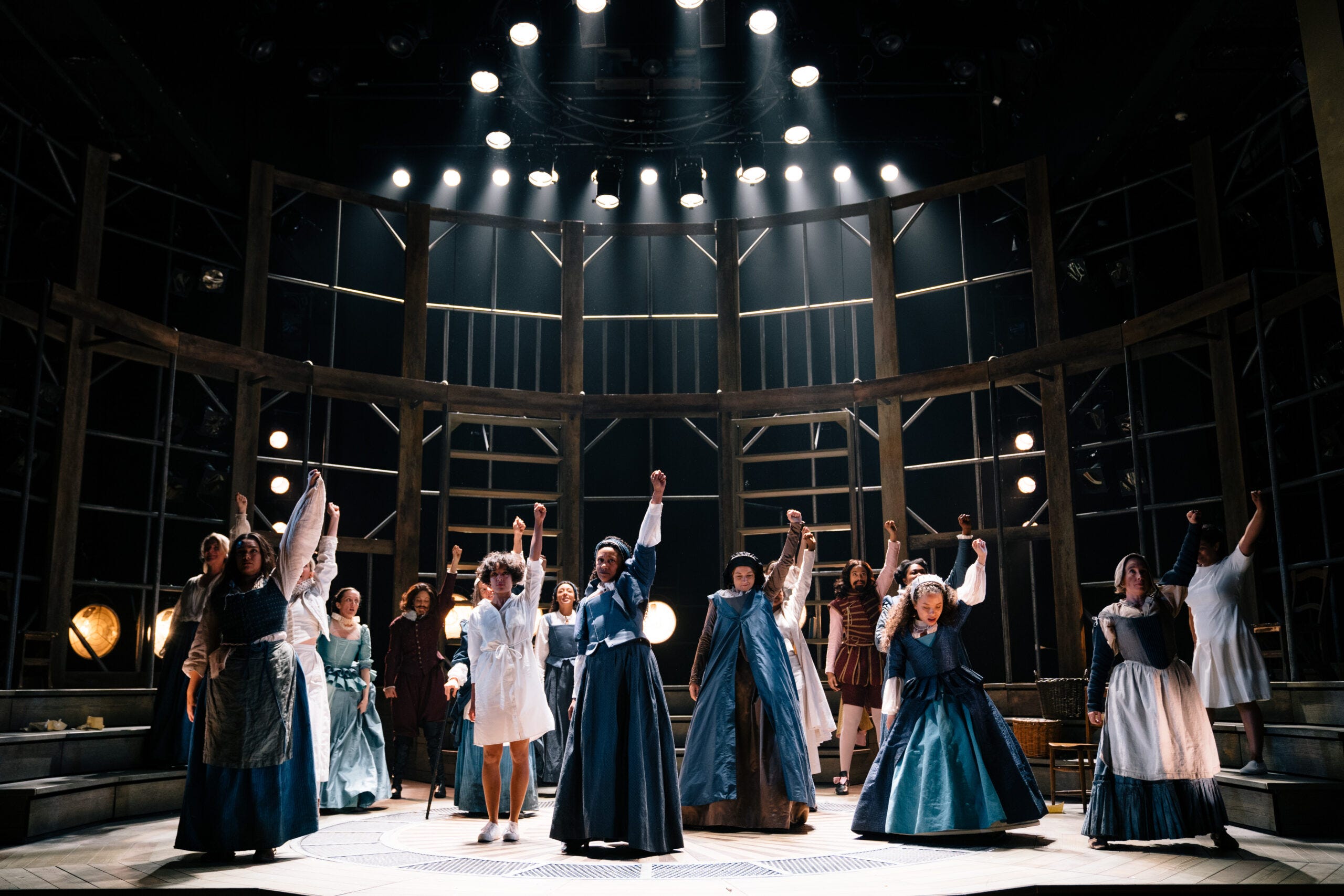
5. Emilia (Shakespeare’s Globe, 2018; Vaudeville Theatre, 2019)
There has been a surge of feminist history plays in the last ten years, including Tanika Gupta’s The Empress, Jackie Sibblies Drury’s Marys Seacole, and Charlie Josephine’s I, Joan. As Rebecca Benzie explores in her book, Feminism, Dramaturgy and the Contemporary History Play, these plays often both recentre history from the position of neglected female/nonbinary characters and reshape dramaturgy in a way that critically illuminates how history is told. Morgan Lloyd Malcolm’s Emilia unearths the life of Emilia Bassano, a poet sometimes claimed to have been the inspiration for Shakespeare’s ‘Dark Lady’ sonnets. Lloyd Malcolm’s play splits the role of Emilia, thought to have been of North African descent, into three substantial parts for Black actors.
In Nicole Charles’ production, there was something magic in watching such a large, all-female cast take over a stage so associated with preserving Shakespeare’s legacies. Emilia leaned heavily into popular feminism, proving, as with the success of Toby Marlow and Lucy Moss’ SIX, that feminist plays can provide a good night out. While I felt that sometimes the story was told in slightly too broad strokes, Emilia powerfully centred the struggle of a ‘clever woman’ to get her voice heard in a society where speaking out as a woman carried great risks. For some of the plays in this list, the questions raised lingered in my mind long after I saw them. In the case of Emilia, for me and many others, it is the feeling of feminist struggle and solidarity that it invoked. I still remember Clare Perkins blazing delivery of the final monologue of the show, galvanising an anger that carries from the play’s 17th-century setting to the moment of its performance.
6. Glass. Kill. Bluebeard. Imp (Royal Court, 2019)
Obviously you can’t have a list of ten years of feminist theatre without including Caryl Churchill. Yet, while she is distinctly political in both her plays and her actions, the formal complexity of her writing means her plays resist being confined to a single agenda. Glass. Kill. Bluebeard. Imp. can be read as an oblique response to the #MeToo movement and the accusations of sexual harassment against Max Stafford-Clark, her former director. Of the four short plays, directed by James Macdonald, Bluebeard’s Friends is the most direct. A group of friends at a series of dinner parties process the shock of finding out that their friend turned out to be a mass murderer of his wives. Their performative condemnation of Bluebeard’s actions quickly turns into an attempt to monetise the connection. In Miriam Buether’s set design, bloodied dresses drop from the ceiling and hang like bodies, perfectly capturing the macabre tone of the piece.
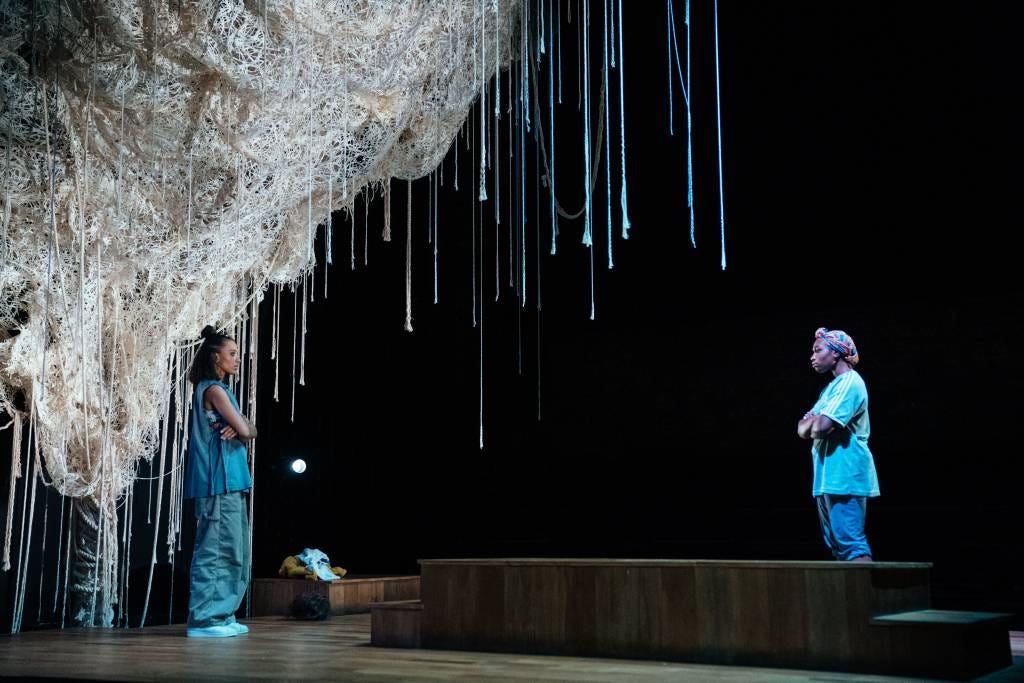
7. seven methods of killing kylie jenner (Royal Court, 2019, 2021)
Dan Rebellato called Jasmine Lee-Jones’ seven methods “the first play I’ve ever seen that really found a theatrical form to make social media work onstage”. Lee-Jones created a unique idiom that found the poetry in everyday internet slang, crafting a form that could contain both informed debates on colourism and the colonial legacies of white beauty standards and craft a thrillingly believable friendship between two young Black women, Cleo and Kara. In director Milli Bhatia’s production, the actors embody GIFs and memes, flickering through accents and physicalities in Twittersphere scenes, then adding depth and detailed characterisation for Cleo and Kara in the IRL scenes.
I didn’t get to see seven methods until 2021. Against the resurgence of Black Lives Matter activism and the increasing role that the internet had played in the lives of many during the pandemic, seven methods resonated even more strongly with the contemporary moment. The play and production deftly situated Black feminist ideas in Cleo and Kara’s everyday lives.
8. Maryland (Royal Court, 2021; BBC Two, 2022)
Maryland was forged in anger. Lucy Kirkwood wrote the 30-minute play in response to the murder of Sabina Nessa minutes from her home in South East London. 2021 saw a wave of high-profile cases of violence against women in the UK, including the murder of Sarah Everard by a serving police officer and the revelation that police officers had shared photographs of the bodies of murdered sisters Bibaa Henry and Nicole Smallman in a WhatsApp group. Kirkwood’s play both captures the sense that violence against women is so common that it has become mundane and, through its use of the absurd, activates outrage that this should be the case.
Two women, both named Mary, go to the police station to report crimes against them. The police officers go from jocularly unhelpful to actively obstructive. Between these choppy, short scenes, a community chorus of Furies read questions from a survey about the local area, which quickly become laced with danger and violence: “If I was attacked and left for dead I know which doors on my street I would drag my bloodied carcass to knock on and which ones I wouldn’t”. The play ends with a powerful question, the Furies asking the audience, “What fresh hell do you need? Before you are as angry as we are?” As well as being performed at the Royal Court, the play was made available to community groups to stage their own readings, suggesting the activist power of feminist theatre to respond rapidly to current events.
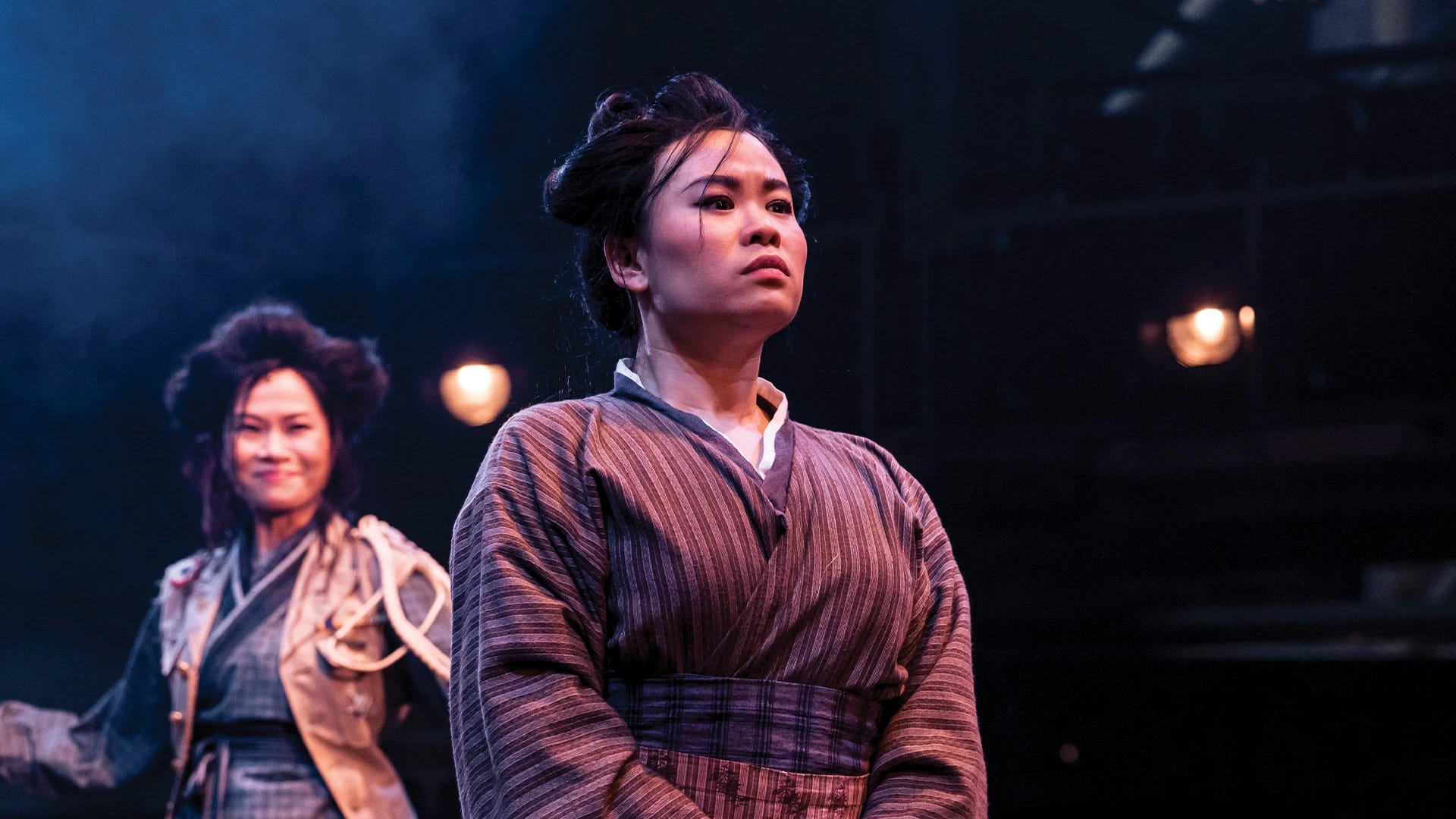
9. UNTITLED F*CK M*SS S**GON PLAY (Royal Exchange and Young Vic, 2023)
“Kim is having one of those days. A terrible, very bad, no-good kind of day”, starts the blurb for Kimber Lee’s play with tongue-in-cheek understatement. Kim, played by Mei Mac in Roy Alexander Weise’s production, is stuck repeating scenes from eerily similar Western imaginings of Asian life, ripped from the playbook of Miss Saigon. In each scene she falls in love with a handsome Western soldier, Clark, they get married and Kim gets pregnant. Clark comes back with new white American wife in tow. He takes the child from Kim, and Kim kills herself in a ritualistic suicide. The play’s parody of Western representations of Asia, particularly Asian women, is at once excruciating and hilarious.
Later in the play, Kim reveals the emotional impact this repeated performance has had on her. She remembers the feeling of her son, ripped from her arms, and says she carries the violence inflicted upon her in her body. In this scene, set at a dinner party for her brother and his white fiancée hosted by her mother, Kim has supposedly broken out of the constrictions of the repeated scenes. But stereotypes and expectations still endure, pinioning Kim. For me, the play felt slightly too short to explore the new dimensions it raised in the final scene – but it perfectly skewered the complexities of debates around representation.
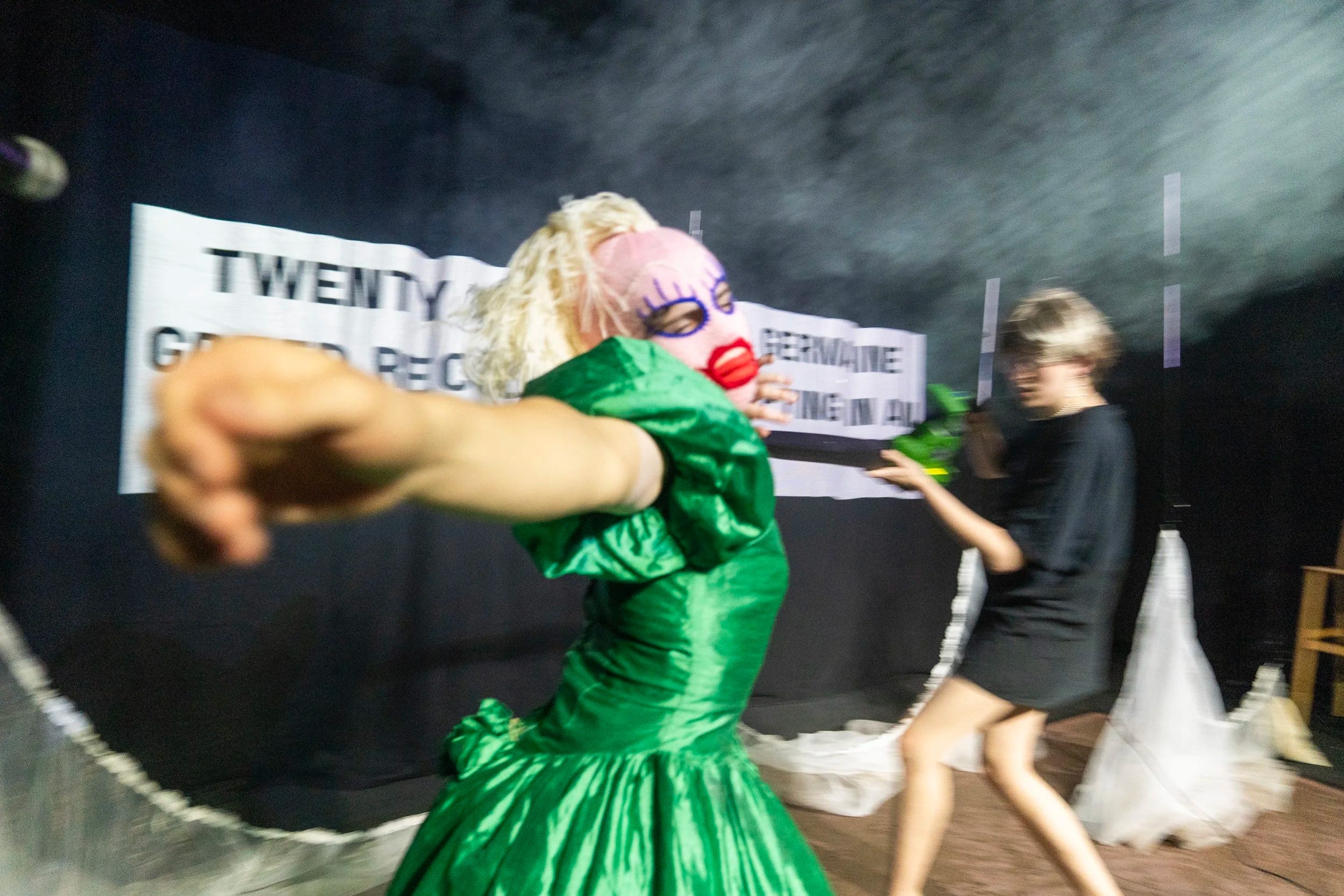
10. Ugly Sisters (Underbelly and New Diorama 2024; Soho Theatre 2025)
In their show Ugly Sisters, Piss/ CARNATION (aka Laurie Ward and Charli Cowgill) deftly and creatively explore the tensions within the UK feminist movement between so-called gender critical feminists and trans women. Germaine Greer wrote about meeting a trans woman at one of her events, who thanked her “for all you have done for us girls”. Greer violently refused the assertion of sisterhood. Ward and Cowgill repeatedly replay this incident, as if in so doing they might change what happened or at least get further insight. Cowgill starts the show playing Greer; Ward plays the unnamed trans woman, dressed in a green ballgown, pink balaclava and wig, with huge plastic red lips. She’s a grotesque parody of a trans woman, all the bad things that Greer projects onto her. Meanwhile a drag Greer, replete with nipple tassels and six-inch heels, takes away some of the sting of Greer’s transphobia through parody.
Ward and Cowgill let their imaginations run wild and thereby take back control of the narrative. Ward holds a funeral for Greer, burying her in soil with the help of some audience volunteers. Later in the show, the two performers stage a passionate, abstractly choreographed sex-scene between Greer and the trans woman, suggesting that some of Greer’s hostility might be due to her own frustrated desires at her sense of the limitations of womanhood. Amidst the drag and parody, Ward and Cowgill also give poetic voice to the trans woman’s experience of the encounter and what it meant for her, writing her back into the story.
So here we are. Over the last ten years I’ve grown as a feminist and a theatre critic. And much of that journey can be traced through the plays I’ve seen; when looking back at these plays, I’m revisiting the person I was when I saw them as well as the performances. Writing this piece has also brought home to me how many of the greatest plays of the decade have been created by women. I’d love to hear your own formative, feminist theatrical experiences in the comments.
Radical Realisms in Contemporary British Theatre: Rethinking Feminist Form in Plays by Women by Hannah Greenstreet is published by Bloomsbury Methuen Engage, 21 August. Get 35 per cent off with discount code GLR AT8.
 Dr Hannah Greenstreet